
Key Takeaways
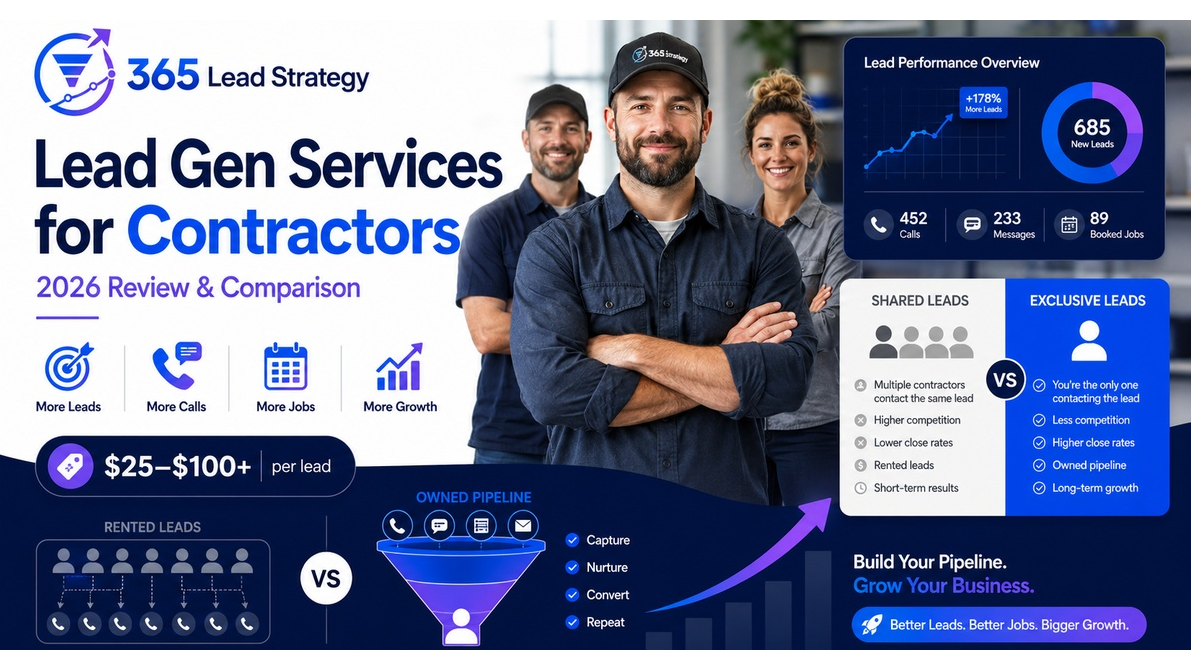
- Service contractors pay $25-$100+ per lead with wildly varying quality, making exclusive leads 2-3x more valuable than shared ones
- BuildFolio offers lead ownership with quoting features starting free, while Angi Leads and Google LSA provide quick volume at premium pricing
- Total cost to close a job matters more than per-lead pricing when evaluating lead services
- Smart contractors diversify with owned channels plus paid sources, following the 5-15% revenue rule for marketing budget allocation
- Building your own pipeline beats renting leads you don’t own for long-term business growth
The lead generation landscape for service contractors has become a battlefield of rising costs and declining quality. While the promise of instant leads sounds appealing, the reality often involves paying premium prices for shared opportunities that pit contractors against each other in price wars.
Service Contractors Pay $25-$100+ Per Lead for Quality That Varies Wildly
The home services industry faces a harsh reality: lead costs continue climbing while quality remains unpredictable. Contractors report spending anywhere from $25 for basic handyman leads to over $100 for specialized services like roofing or HVAC. Yet these price tags tell only part of the story.
The real challenge isn’t the upfront cost—it’s the hidden expenses. When contractors receive leads that turn out to be tire-kickers, wrong phone numbers, or homeowners who’ve already hired someone else, that $50 lead suddenly costs $250 in wasted time and follow-up efforts. Industry data shows conversion rates on marketplace leads often hover between 10-30%, meaning contractors need multiple leads to secure a single job.
Market research reveals that lead quality varies dramatically across platforms and service types. High-intent leads from homeowners actively searching for specific services convert at much higher rates than general inquiries from marketplace browsers. Lead generation experts consistently emphasize that understanding the source and intent behind each lead proves more valuable than focusing solely on volume or price per contact.
Shared vs. Exclusive Leads: Why Your Close Rate Depends on Ownership
The fundamental difference between shared and exclusive leads can make or break a contractor’s profitability. Shared leads create an immediate disadvantage: contractors compete with 3-4 others for the same homeowner’s attention, often leading to rushed estimates and price wars that erode margins.
Shared Lead Downsides: Competing with 3-4 Other Contractors
Shared lead models force contractors into a race they can’t control. The moment a lead arrives, multiple contractors start calling the same homeowner, creating pressure to respond instantly and often quote lower prices to win the job. This competition dynamic benefits platforms selling leads but rarely serves contractors or homeowners well.
Contractors report that shared leads frequently result in homeowners feeling overwhelmed by multiple calls and quotes. The homeowner’s decision often comes down to price rather than quality, service, or expertise. This environment pushes skilled contractors to compete primarily on cost rather than value, ultimately reducing industry-wide profit margins.
Exclusive Leads Convert 2-3x Higher at Lower Total Cost
Exclusive leads eliminate the immediate competition factor, allowing contractors to focus on building relationships rather than winning bid wars. When contractors own leads exclusively, they can take time to understand the project properly, provide detailed estimates, and showcase their expertise without rushing to beat competitors.
Data from successful contractors shows exclusive leads typically convert at 27-60% rates compared to 15-25% for shared leads. The math becomes clear: paying $75 for an exclusive lead that closes 50% of the time costs $150 per job. A $40 shared lead that closes 20% of the time costs $200 per job. The exclusive lead provides better value despite the higher upfront cost.
BuildFolio: Converting Website Traffic with Quoting Features
BuildFolio represents a different approach to lead generation: instead of selling contractors leads from marketplace traffic, it helps them capture and convert visitors already coming to their websites. This ownership model means every lead belongs exclusively to the contractor who earned the website traffic.
Lead Ownership Plus Quoting Features
The platform’s core strength lies in lead ownership combined with conversion optimization. BuildFolio’s quoting system provides instant project estimates, allowing homeowners to see pricing before submitting contact information. This pre-qualification process filters out casual browsers and delivers higher-intent leads.
The photo-to-quote feature enables contractors to provide preliminary estimates from uploaded photos without scheduling initial site visits. This automation saves time for both contractors and homeowners while increasing the likelihood that submitted leads represent genuine project opportunities.
Free Tier vs. Professional Plan
BuildFolio’s free tier includes basic lead capture widgets, financing previews, and photo upload functionality. The Professional plan adds missed-call text-back, automated SMS follow-up sequences, and additional quoting features. This pricing structure allows contractors to test the platform’s effectiveness before committing to monthly fees.
The value proposition becomes compelling for contractors already generating website traffic through Google Business Profile optimization, referrals, or local SEO efforts. Rather than paying per lead indefinitely, contractors invest in tools that improve their conversion rates on traffic they’ve already earned.
When BuildFolio Won’t Work for Your Business
BuildFolio requires existing website traffic to generate leads. Contractors without established online presence, active Google Business Profiles, or referral networks may find the platform produces limited results initially. New contractors or those in highly competitive markets might need to combine BuildFolio with paid lead sources until their organic channels mature.
The platform also works best for contractors comfortable with technology and automation. Businesses preferring traditional phone-based lead qualification may find the digital-first approach less suitable than marketplace leads that arrive as direct phone calls.
Angi Leads and Google LSA: Quick Volume with Premium Pricing
For contractors needing immediate lead volume, established marketplace platforms like Angi and Google Local Services Ads offer rapid deployment but come with significant ongoing costs and competition challenges.
Angi’s Massive Network vs. Shared Lead Reality
Angi’s extensive homeowner network generates substantial lead volume across virtually every home service category. The platform’s brand recognition and marketing investment drive consistent traffic from homeowners actively seeking service providers. However, this volume comes with the shared lead model that creates immediate competition among contractors.
Successful Angi contractors develop systems for rapid response and competitive quoting while maintaining service quality. The platform works best for contractors who can efficiently handle high lead volumes and convert shared opportunities through superior customer service and follow-up processes.
Google Local Services Ads: Higher Intent, Slower Setup
Google Local Services Ads provide access to homeowners searching directly on Google for specific services. The “Google Guaranteed” badge builds immediate trust and credibility, often resulting in higher-quality leads than marketplace platforms. The verification process, including background checks and license validation, can take weeks but creates barriers that reduce competition.
LSA leads typically demonstrate higher intent since homeowners search for specific services rather than browsing general marketplace options. The pay-per-lead model with dispute options for invalid contacts provides some quality control, though leads still involve competition with other verified contractors in the same service area.
Total Cost Analysis: Beyond Per-Lead Pricing
Evaluating lead sources requires calculating total cost per closed job rather than focusing solely on per-lead pricing. A $25 shared lead that closes 15% of the time costs $167 per job before considering time spent on estimates and follow-up. A $75 exclusive lead closing 45% of the time costs $167 per job but requires less time and effort per conversion.
Smart contractors track conversion rates, response time requirements, and total time investment for different lead sources. This data reveals the true cost-effectiveness of various platforms and helps optimize marketing budget allocation across multiple channels.
Evaluating Lead Services: 4 Criteria That Actually Matter
Choosing effective lead generation services requires looking beyond marketing promises and examining measurable factors that impact actual business results. Four key criteria separate genuinely valuable lead sources from expensive distractions.
1. Total Cost to Close a Job (Not Just Cost Per Lead)
The most important metric for any lead service is the total cost required to convert leads into completed, profitable jobs. This calculation includes the per-lead fee, time spent on estimates, follow-up efforts, and the percentage of leads that actually close. A platform charging $100 per lead with 40% close rates may prove more profitable than one charging $30 per lead with 8% close rates.
Contractors should track these metrics for at least 3-6 months to account for seasonal variations and get accurate conversion data. Many platforms front-load their highest quality leads to new users, making short-term testing unreliable for long-term decisions.
2. Lead Quality and Homeowner Intent Signals
High-quality leads come from homeowners who have demonstrated genuine intent to hire a contractor. Intent signals include specific project details, budget discussions, timeline requirements, and willingness to schedule consultations. Leads lacking these elements often represent casual browsers or comparison shoppers with limited commitment to moving forward.
The best lead services provide context about how homeowners found the platform and what information they provided. Leads from homeowners who searched for specific services, uploaded project photos, or provided detailed descriptions typically convert at much higher rates than generic “contact me” submissions.
3. Response Time Requirements for Maximum Conversion
Lead conversion rates drop dramatically as response time increases. Studies show contractors responding within 5-15 minutes achieve significantly higher close rates than those calling back after an hour. Some platforms require near-instant response to remain competitive, while others allow more flexibility in follow-up timing.
Contractors must honestly assess their ability to meet response time requirements before committing to platforms with strict expectations. Missing response windows not only reduces individual lead conversion but can also negatively impact platform algorithms that determine future lead distribution.
4. Long-term ROI vs. Rental Dependency
The most sustainable lead generation strategies build long-term business value rather than creating ongoing dependency on third-party platforms. Services that help contractors improve their websites, search rankings, or customer databases provide compounding returns over time. Pure marketplace leads offer immediate results but create no lasting business assets.
Contractors building successful businesses typically use marketplace leads strategically while investing in owned channels that reduce dependency over time. The goal is transitioning from renting leads to owning the systems that generate them.
Diversification Strategy: Owned Channels Plus Paid Lead Sources
The most resilient contractor businesses avoid over-dependence on any single lead source. A diversified approach combines owned channels that build long-term value with paid sources that provide immediate volume when needed.
Google Business Profile: Most Impactful Free Strategy
Google Business Profile optimization delivers the highest return on investment for most contractors’ free marketing efforts. A complete, review-rich profile with regular posts and customer photos generates leads through Google Maps and local search results. These leads cost nothing beyond time investment and belong exclusively to the contractor.
Contractors should prioritize getting positive reviews, posting project photos, and maintaining accurate business information. Google Business Profile leads often convert at higher rates than marketplace leads because homeowners find contractors through location-based searches for specific services.
Website Optimization: Converting Referrals into Leads
Many contractors receive referrals and word-of-mouth recommendations but lose potential customers due to poor website experiences. Optimizing websites for mobile use, fast loading, and clear contact information helps convert referral traffic into actual leads. Tools that capture visitor information and provide instant project estimates can significantly improve conversion rates.
Website optimization provides lasting value since improvements benefit all traffic sources. Better websites improve the effectiveness of paid advertising, social media marketing, and direct referrals while building credibility with potential customers.
5-15% Revenue Rule for Marketing Budget Allocation
Successful contractors typically invest 5-15% of annual revenue in marketing and lead generation activities, with growth-oriented contractors often investing 8-12% or more. For a $500,000 annual revenue business, this means $25,000-$75,000 yearly marketing budget across all channels. This budget should be split between immediate lead generation and long-term brand building activities.
The allocation should favor owned channels and sustainable strategies over time. New contractors might start with 70% marketplace leads and 30% owned channels, gradually shifting to 30% marketplace leads and 70% owned channels as organic traffic grows.
Stop Renting Leads You Don’t Own – Build Your Pipeline Instead
The most successful contractors in 2026 will be those who transition from renting leads to owning their customer acquisition systems. While marketplace leads can fill immediate gaps, building owned channels creates sustainable competitive advantages that compound over time.
This shift requires patience and strategic thinking. Owned channels like SEO, content marketing, and referral systems take months or years to mature but eventually produce higher-quality leads at lower costs. Contractors who make this transition early gain significant advantages over competitors dependent on increasingly expensive marketplace leads.
The goal isn’t to eliminate all paid lead sources immediately but to gradually reduce dependency while building systems that generate exclusive, high-converting opportunities. Contractors who master this balance achieve predictable growth without the constant pressure of rising lead costs and increased competition.
For lead generation strategy development and implementation, contractors can research various services and platforms to find solutions that match their specific business needs and growth objectives.
365 Lead Strategy
info@365leadstrategy.com
12060 Industry Blvd.
#1051
Jackson
CA
95642
United States


