
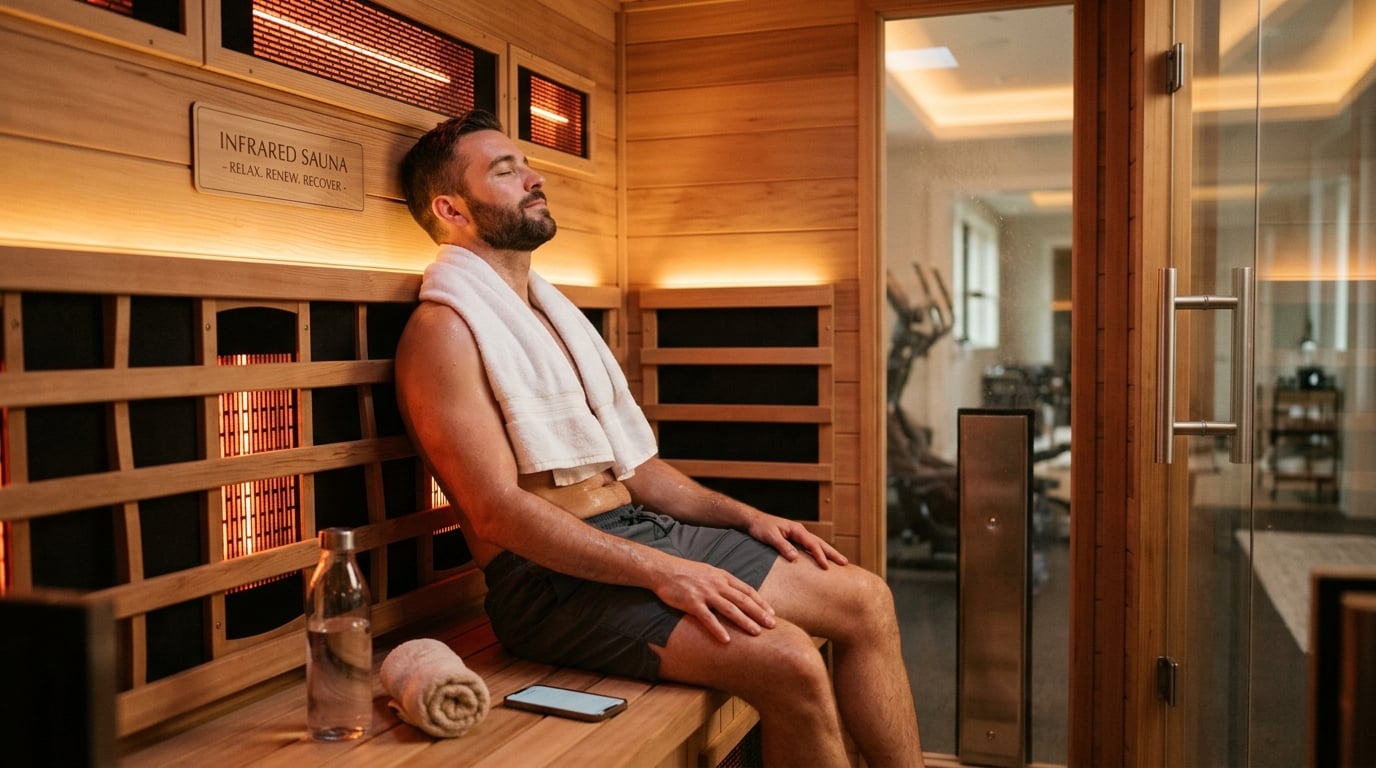
Key Takeaways
- The FD-4 Trinity runs on a standard 120V household outlet, so most installs skip the electrician entirely
- The FD-5 Trinity XL seats four people and needs a dedicated 240V circuit, which usually means hiring a licensed electrician
- Price difference between the two cabins is $1,200, but electrical work can widen that gap for the FD-5
- Both cabins combine infrared heat, traditional Finnish steam, and red light therapy in one unit
- Matching the sauna to available space and electrical capacity matters more than picking the larger model by default
Choosing between a hybrid sauna’s two size options often comes down to one overlooked detail: what’s already running through the walls of a home. The Finnmark Trinity line proves that point clearly, since its two cabins share nearly identical technology but split sharply on electrical needs, room size, and price.
One Circuit Decides Your Install
Most buyers spend their time comparing sauna features and forget to check their electrical panel first. That’s a mistake, because the single factor most likely to determine installation cost and timeline is the type of circuit a home already has available.
The FD-4 Trinity plugs into a standard household outlet, the same kind used for a television or a lamp. The FD-5 Trinity XL, on the other hand, needs a dedicated 240V circuit, similar to what powers an electric dryer or range. For a closer look at how these differences play out in real installations, Collective Relaxation breaks down size, power, and price side by side. Understanding this one distinction before shopping saves a lot of confusion later.
What Both Cabins Share
Despite their differences, the FD-4 and FD-5 Trinity XL are built from the same core idea: three heat and light therapies working from a single cabin instead of forcing a choice between them.
- Spectrum Plus™ infrared heaters that reach up to 170°F for a gentler, deeper-penetrating warmth
- A traditional Finnish steam heater using vulcanite stones, reaching up to 190°F
- Spectrum Red Light™ therapy delivered through a 192-diode LED panel at 650nm, paired with chromotherapy lighting
- A cedar interior with a Thermo-Aspen exterior shell, plus a touchscreen LCD controller and Bluetooth audio with built-in speakers
Both cabins include the same three therapies, so neither forces a compromise on the wellness experience itself. The real decision comes down to how much space a household has and how much power it’s willing to run to that space.
Size and Capacity Compared
FD-4: Built for Two
The FD-4 measures 48 inches wide, 48 inches deep, and 83 inches tall on the outside, with roughly 86 cubic feet of interior room volume. That’s enough space for one person to stretch out fully or two people to sit comfortably during a session. Apartments, smaller bedrooms, and converted closets tend to suit this cabin well, since its footprint is compact without feeling cramped for solo or couple use.
FD-5 Trinity XL: Room for Four
The FD-5 Trinity XL scales up considerably, at 75 inches wide, 64 inches deep, and the same 83 inches tall. Interior room volume climbs to roughly 130 cubic feet, more than 50 percent larger than the FD-4. That extra volume translates directly into seating for four people, making the cabin a realistic option for family sessions or small group use rather than solo relaxation.
Electrical Requirements Explained
FD-4: Standard 120V Outlet
Every system in the FD-4 – the infrared heaters, the traditional steam heater, and the red light panel – draws power from the same 120V/15A household outlet. The infrared system runs at 1750 watts, while the traditional Harvia Vega Compact heater adds 1.9kW of steam-generating power. Because everything shares one common circuit type, most homes can plug in the FD-4 and start using it without any panel work or electrician visit.
FD-5: Dedicated 240V Circuit
The FD-5 Trinity XL’s larger cabin needs more heating power to fill its extra volume, and that’s where the traditional heater steps up to 4.5kW. Delivering that much power requires a dedicated 240V circuit, the same class used for major kitchen or laundry appliances. Unless a home already has 240V service running to the installation spot, this typically means bringing in a licensed electrician to run a new line before the sauna can be used. That single requirement is the biggest practical difference between the two cabins, since it adds both cost and scheduling time beyond simply unboxing the unit.
Weighing Price Against Installation
On paper, the price gap between these two cabins looks small. The FD-4 Trinity is priced at $7,795, while the FD-5 Trinity XL runs $8,995, a $1,200 difference. That gap tells only part of the story, though, since it doesn’t include what an electrician might charge to run a new 240V line for the FD-5.
Operating costs differ too, once the sauna is up and running. The FD-5 Trinity XL costs roughly 30 to 40 cents per hour on infrared mode and roughly 50 to 65 cents per hour on traditional steam mode, reflecting its larger heater’s higher power draw. The FD-4’s lower-wattage systems generally cost less per hour to run, which adds a small but steady savings over time for anyone using the sauna regularly. Anyone comparing the two models on a strict budget should factor in electrical work, not just the sticker price, before making a final call.
Matching the Sauna to Your Home
Picking the right cabin comes down to answering a few honest questions about space, electrical capacity, and how the sauna will actually get used day to day.
- Solo use or use as a couple, in a tighter space: the FD-4 Trinity fits comfortably and keeps installation simple.
- Family sessions or entertaining a few people at once: the FD-5 Trinity XL’s extra room volume makes that realistic.
- Wanting to avoid touching the home’s electrical panel entirely: the FD-4’s 120V outlet requirement makes that possible.
- Already planning an electrical upgrade for other equipment, such as a hot tub or EV charger: the FD-5’s 240V circuit becomes less of a hurdle since the work may already be happening.
- Working with the tightest total budget within the Trinity line, including installation: the FD-4 keeps costs lower on both fronts.
Floor space matters just as much as electrical service. Both cabins need a reasonably flat, dry surface and at least 12 inches of clearance on three sides for proper airflow, so measuring the intended spot before ordering avoids surprises on delivery day. Both models also ship via freight delivery by special appointment, arriving on a wooden pallet with curbside drop-off, meaning some assembly happens after the driver leaves.
Simplicity or Capacity Wins Out
For anyone who wants a straightforward plug-in install without scheduling an electrician, the FD-4 Trinity remains the simpler and more budget-friendly path. For households with the space and willingness to run a new 240V circuit, the FD-5 Trinity XL delivers a meaningfully larger cabin built for shared family use. Both cabins combine infrared heat, traditional steam, and red light therapy regardless of size, so the technology itself stays consistent either way.
Before deciding, it’s worth measuring the installation space, confirming what type of electrical service already exists there, and weighing how many people will realistically use the sauna at once. Getting a quote from a local electrician ahead of time, especially for the FD-5, helps avoid budget surprises after the cabin has already arrived. Purchasing from a certified dealer also guarantees that purchases are protected and products are sourced from genuine manufacturers.
Collective Relaxation
jerry@CollectiveRelaxation.com
+1 929 493 4366
194 Woehrle Avenue
STATEN ISLAND
NY
10312
United States


